

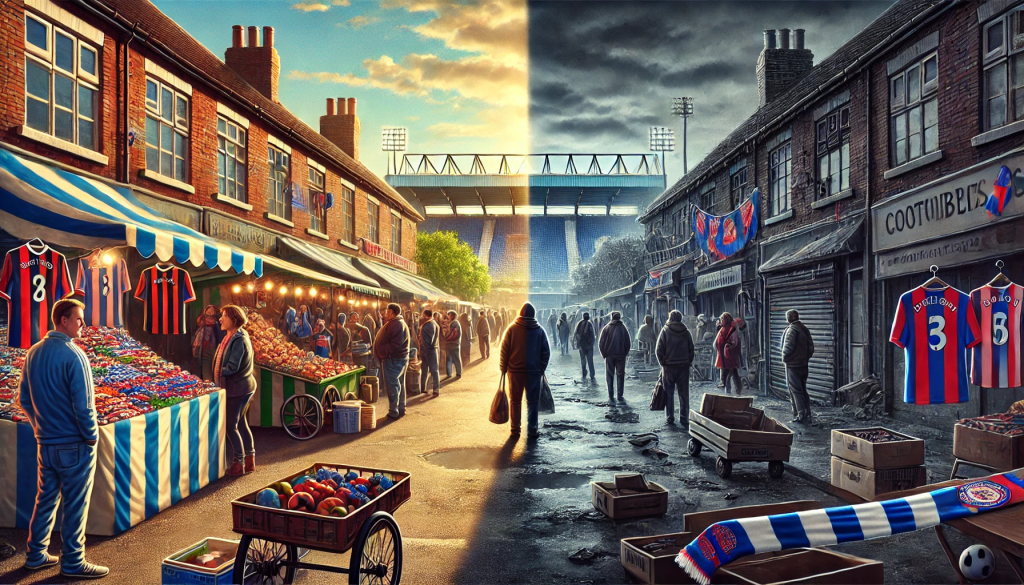
Do governing bodies really consider the full effects that closing down a football club has on individual fans and their local communities?
A supporter’s connection to a football club may stem from deep psychological and social factors. Here is a breakdown:
1. Social Identity Theory
• Football clubs can serve as a key part of an individual’s social identity. People derive a sense of belonging and pride from being part of a larger group of people with shared values, history, and passion. Supporting a club reinforces feelings of inclusion and self-worth.
2. Tribalism and Group Psychology
• Human beings are wired for tribalism. They seek to associate with groups that provide safety, belonging, and purpose. A football club becomes a “tribe” that individuals rally around. This may foster strong loyalties. This tribal nature also emphasises “us vs. them” dynamics.
3. Emotional Investment
• Supporting a club usually involves emotional highs and lows, which can be driven by the club’s performance. Over time, these experiences create a strong psychological bond: similar to the kind of loyalty seen in close personal relationships.
4. Cultural and Familial Influence
• Many fans inherit club allegiance from family or are influenced by the culture of their region, making the attachment feel natural and deeply personal.
Why Fans Dislike Supporters of Rival Clubs:
1. Ingroup vs. Outgroup Bias
• Social Identity Theory explains why people favour their own group (ingroup) while showing animosity toward outsiders (outgroup). Rival fans symbolise a competing identity, intensifying conflict.
2. Symbolic Rivalry
• Football rivalries often reflect historical, cultural, or socioeconomic divides (e.g., urban vs. rural, working-class vs. elite). Disliking rival supporters reinforces one’s own group’s values and identity.
3. Projection of Passion
• Passion for one’s own club can translate into strong negative feelings toward anything perceived as a threat or opposition, including rival fans.
4. Emotional Catharsis
• Dislike or banter directed at rival fans allows individuals to vent emotions in a controlled, socially sanctioned way, reinforcing the drama and intensity of the sport.
Ultimately, attachment to football clubs and rivalry with others taps into fundamental human needs for identity, belonging, and competition.
In England, cultural and familial influences are particularly strong in shaping attachment to football clubs. Football is deeply embedded in the nation’s history and social fabric, making club allegiance a key part of local and family identity. Here’s a closer look:
1. Regional Identity and Local Pride
• Football clubs in England are tied to specific cities or towns, and supporting a club is a way to express local pride. For example, clubs like Newcastle United, Liverpool, and Manchester United are emblematic of their regions, representing not just sport but the spirit of the local community.
• In working-class areas, football historically provided an escape from industrial hardships. Clubs became symbols of resilience and community pride, passed down through generations.
2. Family Traditions
• Many fans grow up in households where supporting a particular club is a family tradition. Parents often introduce children to “their” club, taking them to matches, buying merchandise, and sharing stories of past glories. This creates a strong emotional bond that feels almost hereditary.
• In England, the phrase “it’s in the blood” reflects how deeply ingrained football allegiance can be within families, where switching allegiance is considered a betrayal.
3. Cultural Rituals
• Match day rituals—such as traveling to the stadium, singing club chants, and socialising at pubs—are significant cultural practices. These rituals are often experienced within families or local communities, reinforcing attachment to the club and its culture.
• Clubs like West Ham United are associated with specific cultural traditions (e.g., the East End working-class identity), and their chants and folklore become part of the shared family narrative.
4. Historical and Social Context
• Football clubs often mirror broader social dynamics. For instance, rivalries such as Liverpool vs. Manchester United reflect historical economic competition between cities during the Industrial Revolution.
• Clubs like Aston Villa or Sheffield Wednesday were founded in the 19th century and have histories intertwined with the rise of urban working-class culture. This historical significance is preserved and celebrated within families and local areas.
5. Cultural Representation in Media
• In England, football is central to popular culture, with clubs and their rivalries heavily represented in films, books, and TV shows (e.g., Green Street or Fever Pitch). These narratives often depict club loyalty as a vital part of family and local identity, further reinforcing its importance.
6. Rivalries as Cultural Markers
• Local rivalries, such as the North London Derby (Arsenal vs. Tottenham) or the Merseyside Derby (Liverpool vs. Everton), are deeply rooted in cultural and geographic divisions. Families living in these areas often inherit the rivalry, shaping their perception of “the other side.”
In England, football is far more than a sport; it is a cultural institution, with clubs acting as vessels for family identity, local pride, and historical narratives. This creates a powerful, multi-generational attachment to clubs that feels as much cultural as personal.
The removal, expulsion, or collapse of a football club, as in the case of Bury FC, can have significant emotional, psychological, and social effects on its supporters and the wider community. Football clubs are more than just teams; they are symbols of identity, belonging, and local pride. Here’s an analysis of the potential effects:
1. Loss of Identity and Community
• Personal Identity: For many fans, a football club forms part of their personal identity. Losing the club can feel like losing a part of themselves, leading to feelings of disorientation and grief.
• Community Cohesion: Clubs like Bury FC act as focal points for their communities, bringing people together across generations. Without the club, the shared cultural and social rituals that strengthen community bonds may disappear.
2. Emotional and Psychological Impact
• Grief and Loss: Fans may experience feelings akin to bereavement, as the collapse of a club represents the end of a cherished part of their lives.
• Anger and Betrayal: Supporters often feel anger towards those they perceive as responsible, such as owners, governing bodies, or local authorities. This can create long-lasting resentment.
• Loss of Purpose: For some fans, particularly those deeply involved in the club (e.g., season ticket holders, volunteers, or matchday regulars), the club’s removal leaves a void in their weekly routines and emotional lives.
3. Economic Impact
• Local Economy: Small clubs like Bury FC are often vital to the local economy. Matchdays bring trade to nearby pubs, restaurants, shops, and transport services. Without the club, many local businesses may struggle or close.
• Employment: Football clubs provide jobs, from players and staff to vendors and security personnel. Their removal leads to job losses, compounding economic challenges in the community.
4. Impact on Local Pride and Legacy
• Loss of Historical Significance: Bury FC had over 100 years of history, including FA Cup victories. The club’s collapse erases a piece of local heritage, leaving residents with a diminished sense of pride in their town’s legacy.
• Symbolic Decline: The disappearance of a football club can symbolise the broader decline of a community, particularly in areas already struggling economically or socially.
5. Disruption to Social Networks
• Breakdown of Social Bonds: For many fans, the club serves as a meeting point to maintain friendships and family connections. Its removal disrupts these relationships, leading to feelings of isolation.
• Impact on Mental Health: Loneliness and lack of community engagement may lead to increased rates of depression and anxiety among affected fans.
6. Long-Term Effects
• Alienation from Football: Fans may feel disillusioned with football as a whole, particularly if the club’s collapse is seen as the result of mismanagement or greed. This can lead to a lasting estrangement from the sport.
• Efforts to Rebuild: Some communities rally to form a phoenix club (e.g., AFC Wimbledon after Wimbledon FC’s relocation). While this can provide hope and a new sense of purpose, it often comes with significant challenges, including financial strain and the loss of historic ties to the original club.
Case Study: Bury FC
• In 2019, Bury FC was expelled from the Football League due to financial mismanagement, devastating its supporters and the town. Many fans reported feelings of heartbreak and anger. Local businesses suffered, and the loss of the club left a cultural and social void.
• Efforts to revive the club, including the formation of Bury AFC, show the resilience of fans, but the challenges of rebuilding highlight the enduring impact of the original club’s demise.
Although Bury have successfully rebuilt their club and resumed home matches at their famous Gigg Lane stadium, even with back to back promotions from the North West Counties league that they are now in, it would take many years to reach the previous league position they held.
In summary, removing a football club affects more than just its immediate supporters. It disrupts personal identities, social connections, and local economies, leaving deep scars on the community.
We wish Bury and their fans the best of luck in achieving their dreams, and hope they create many happy memories along the way.
Discover more from MiniRag ©
Subscribe to get the latest posts sent to your email.

